

Is it better to climb seated or standing?


This is a really common question in road cycling. The answer, as so often, is that it depends.
For the great majority of the time, it is better to stay seated because it's more efficient. You don't have to support your bodyweight and you're using fewer muscles. That means your energy and oxygen consumption is less, which keeps your heart rate lower.
It's also less fatiguing on your legs, because your cadence tends to be higher when seated, meaning you're making a greater number of lighter pushes on the pedals for a given power output, compared to a slower rate of pedalling with more force when standing.
There are a few situations in which it's better to stand up: when the gradient suddenly kicks up, to change your rhythm for a break, and to make an attack. Let's get into those.
When the road suddenly gets steeper, and you know it will be a short ramp, then getting out of the saddle gives you more force to apply to the pedals. It starts by applying your full bodyweight to each pedal stroke and then, to get even more power, by pulling on the handlebars to drive yourself down onto the pedals even harder.
Another great use of climbing out of the saddle is to give yourself a rest. Ever heard the phrase "A change is as good as a rest"? That's what this is about. While it's best to tackle a big mountain such as the Col du Tourmalet seated, because it's 1.5 to 2.5 hours of climbing, occasionally standing for a short period can feel very refreshing. You're not "using different muscles" as is sometimes claimed (how many different leg muscles have you got?!), rather you're changing the range of motion.
There is an optimal way to do this - before you stand, click down the cassette a few gears, three is usually ideal, and then as you stand up maintain the same speed. Do not accelerate. The goal is a slow cadence, simply transferring your bodyweight from one pedal to the other with low effort. Because you didn't accelerate, your power output is about the same, so your heart rate won't shoot up. You're trading higher cadence for higher pedal force, but because you're getting sufficient force from your bodyweight the effort is low. It should feel like walking up a steady hill. Do this for 10-20 seconds, then sit back down and click back to a gear that gives you a comfortable cadence.
The other time to stand is when making a hard acceleration, of course, but this isn't so applicable to your cycling holiday unless you're sprinting your friends for the summit!
You might wonder why pros seem to stand a lot more of the time. The answer is the compounding advantages of being incredibly fit and also lighter. Even so, they still climb in the saddle the majority of the time.
Mentioning weight, it is a factor here. Because the difference in energy cost between climbing seated and standing is down to supporting your bodyweight, heavier riders pay a bigger toll than lighter riders when out of the saddle.
On your next riding vacation, experiment with short periods out of the saddle and aim to spend the majority of each climb turning a comfortable gear at around 75-85rpm. For advice on choosing the correct gearing to ensure this is always possible, check out our gearing guide here.
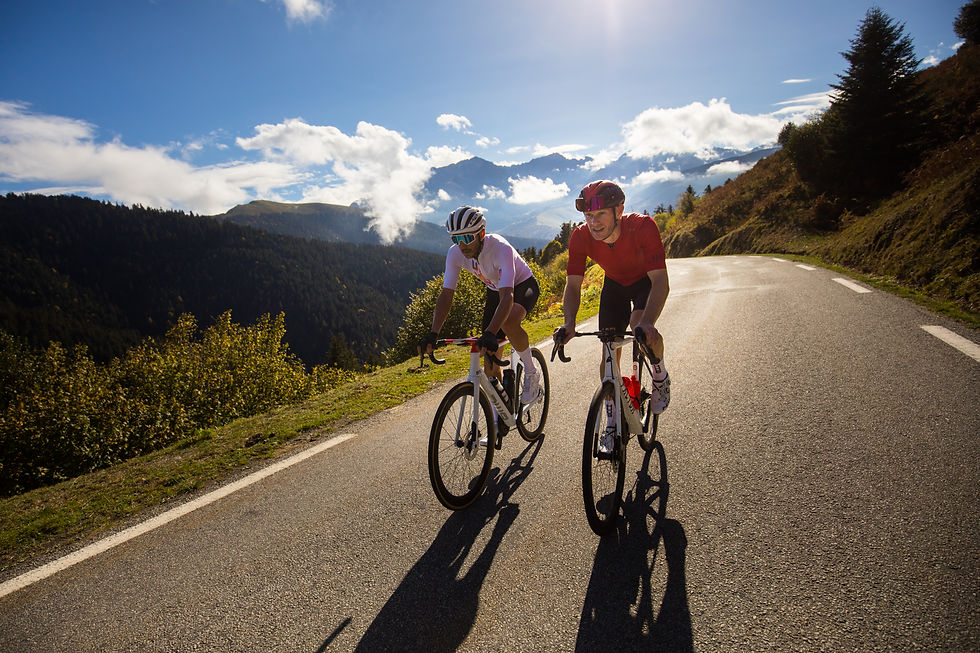
Photos by Chris Storrar


Comments